

Social Performance
SAFETY, HEALTH AND WELLNESS
Safety
Our unrelenting focus on health and safety produced some impressive results during FY2013. Highlights include the achievement of a record-low lost time injury frequency rate (“LTIFR”) of 0.82, a further reduction in fatal incidents, maintenance of OHSAS 18001 certification by the majority of our operations and the achievement of world-class safety performances at some of our operations. These achievements have strengthened our belief that it is possible to achieve Zero Harm at all Murray & Roberts operations.
We unfortunately did not meet our key objective of zero fatal incidents during the year. We deeply regret the death of two colleagues (2012: 4) as a result of work carried out on our behalf. The circumstances that led to these fatalities are provided further on in this report. We continued to make good progress in entrenching our health and safety framework which provides guidance to operating companies in delivering our health and safety commitment. Central to this is our Zero Harm through Effective Leadership programme which seeks to cultivate leadership that is empowered to engage effectively with employees and other stakeholders, while actively crafting a high-performance culture that will ensure sustainable improvement in health and safety.
Employee health and wellness
Work to enhance our employee health and wellness programme continues and includes interventions for the prevention, early identification, early intervention and clinical management of all occupational health and wellness conditions which may impact on our employees’ health and productivity. During the year we reviewed and implemented Group standards to guide operations on occupational health and wellness.
We invited reputable service providers to provide proposals to help operations in implementing this programme. We aim to ensure a consistent standard across our South African operations in addressing the following key areas of our health and wellness programme:
- Occupational health
- HIV/Aids and TB
- Substance abuse
- Chronic diseases
- Psychosocial wellbeing
- Incapacity management.
OUR EMPLOYEES
Great projects start with great people
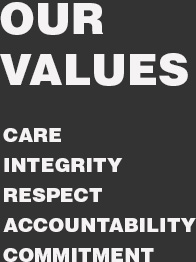
People are the core of our Group and use their skills and experience to deliver our projects according to client expectations. Every one of our employees is crucial to delivering projects that fulfil our client expectations, and to realising our vision of becoming the leading diversified engineering and construction group by 2020. Recognising this, we focus on providing a safe and conducive working environment where employee performance drives Group success. Furthermore, our values of care, integrity, respect, accountability and commitment shape decisions and behaviour on a day-to-day basis influencing how business is conducted.
Investing in our people
We encourage our employees to stretch their capabilities and support them in achieving their full potential by providing a range of learning and development opportunities. The bulk of spend continues to be on technical training. During FY2013 the Group spent R156,2 million on training and development. This represents money spent on formal training initiatives, and not continuous on-the-job training and coaching which enables every employee to perform their duties effectively and safely. In South Africa, we spent R110,3 million of which 74% was on black employees and 15% on women. This equates to about 1,3% of payroll. Our technical training spend in South Africa can be broken down into two main areas, mining – R50,3 million and engineering and construction – R54,8 million.
TRANSFORMATION AND LOCAL ECONOMIC DEVELOPMENT
Murray & Roberts has embraced the philosophy that while broad-based transformation and employment equity are moral, social and legal imperatives, they are also economic imperatives that will shape our Group’s sustainability within the South African context.
Diversity and employment equity
Diversity management and transformation of our workforce continue to be a priority and a challenge.
A diversity programme facilitated by Stanley Bongwe from the Diversity Institute has been implemented across the Group’s South African senior leadership and will be rolled out throughout the businesses. This interactive programme deals with myths and prejudices based on perceived differences. This, together with our values of care and respect, has created a stronger foundation for conducive relationships in a high-performance working environment.
Broad-based Black Economic Empowerment
Murray & Roberts is committed to Broad-Based Black Economic Empowerment (“BBBEE”) in our South African business. We follow the provisions of the Broad-Based Black Economic Empowerment Act No. 53 of 2003 and the principles embodied in the Codes of Good Practice on Broad-Based Black Economic Empowerment (“BBBEE Codes”) and the Construction Sector Charter.
Local economic development
Murray & Roberts is committed to supporting local economic development, with the aim of supporting government and client localisation strategies. We have made a significant investment in our plant and equipment over the past three years with a cumulative capital expenditure of R2,9 billion. R1,6 billion has contributed to the expansion of our productive base.
This investment has created more jobs both directly and indirectly and provides a platform for future growth and economic development in the economies in which we operate.
Preferential procurement as a percentage of total procurement spend increased to 73% (2012: 68%) of the South African operations’procurement expenditure of approximately R11,7 billion. This is above the increased Construction Sector target of 70%.
COMMUNITY DEVELOPMENT
Community engagement within Murray & Roberts has evolved into a group-wide, strategic business imperative that is responsive to the needs of both local communities and national development initiatives. We have has adopted appropriate community strategies aimed at redressing social injustices and contributing to sustainable development.
Three strategic programmes encompass the Murray & Roberts community development strategy, namely Murray & Roberts Corporate Social Investment (“CSI”), the Letsema Sizwe Community Development Trust and the Murray & Roberts Child Welfare Fund. The programmes are aligned with the overall business strategy, focusing on development in the core areas of mathematics, science and technology education, numeracy and literacy development in early childhood and environmental education. Priority is also placed on women’s empowerment, youth development, supporting people living with disabilities, orphans and vulnerable children and promoting high-performance sports development.
| CSI Documents for download | Details |
| Corporate Social Investment Standard |  [109kb] [109kb] |
| CSI Funding application form | [PDF 79KB] |
For a complete report on our Social Performance please visit the online annual integrated report.