Through its asset preservation arm, SANRAL, the Department of Transport has recognised that Cape Town and Gauteng generate nearly 40% of the total value of South Africa's economic activities.
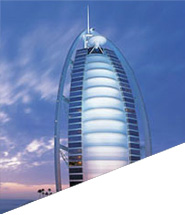
Completed through the partnership of Murray & Roberts and Al Habtoor for the Ruler of Dubai, Sheikh Mohammed Bin Rashid Al Maktoum, Burj al Arab is the world’s tallest structure with a membrane façade...
Murray & Roberts Client Service was established in 2003 to facilitate a rapid and comprehensive response to all internal and external queries relating to any aspect of the Group's worldwide operations...
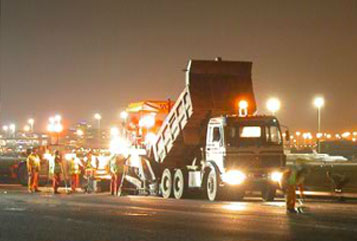
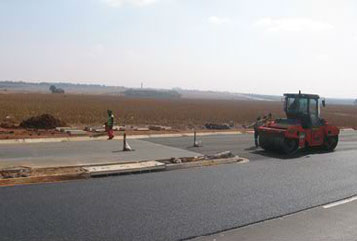
BRIEF FACTS: Location: Johannesburg and Cape Town Client: South African National Roads Agency (SANRAL) Customer: 15 major South African contractors and joint ventures Project Type: Manufacture and delivery of asphalt surfacing materials Value: R867 million Duration: 20 months Project Start: October 2008
OVERVIEW:
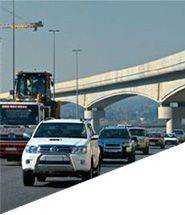
Through its asset preservation arm, SANRAL, the Department of Transport has recognised that Cape Town and Gauteng generate nearly 40% of the total value of South Africa’s economic activities. As a result, development in housing, offices, retail and industrial properties in the two centres has grown significantly over the past 10 years, resulting in above average traffic growth. Provision of road infrastructure has not kept up with the increased traffic demand, resulting in a road and freeway network that is under capacity.
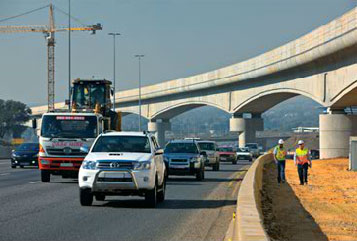
The Gauteng Freeway Improvement Project (GFIP) has been implemented to upgrade and expand the Gauteng freeway network to significantly reduce traffic congestion and unblock access to economic opportunities and social development projects. The GFIP will inject approximately R29 billion into the South African economy and approximately R13 billion into the provincial gross geographic product, creating nearly 30 000 direct jobs over its lifecycle.
In anticipation of this development, Much Asphalt upgraded its facilities and capacity and, as a consequence, has been contracted to supply about 70% of the asphalt required to complete phase 1 of the GFIP.
Phase 1 is due for completion before the end of 2010. The initiative that crosses the Johannesburg, Ekurhuleni and Tshwane metropolitan boundaries widens freeways to at least four lanes in both directions and in some sections up to six lanes. This phase of the project will upgrade 185 kilometres of the existing freeway network. Furthermore, over the lifespan of the project, a further 376 kilometres of upgraded and newly constructed freeways are planned for implementation. The network will provide an interconnected freeway system of inner and outer ring roads, incorporating the historically-neglected western and southern Gauteng settlements.
The most significant contribution the investment will make to ordinary citizens is the quality of life improvement that an upgraded road infrastructure will deliver.
ACHIEVEMENTS:
GFIP: 870 000 tonnes of five different specialist surfacing products (R610 million)
All contracts scheduled for substantial completion for 2010 FIFA World Cup delivered on time
Diavik Diamond Mine
BRIEF FACTS: Location: Northwest Territories at Lac de Gras, Canada Client: Rio Tinto Partners: Kitikmeot Cementation Mining & Development Ltd Project type: Mine Development Start date: 2005
OVERVIEW:
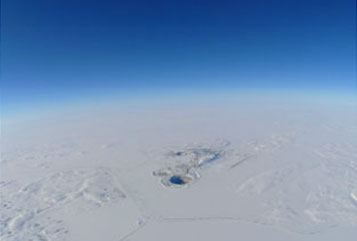
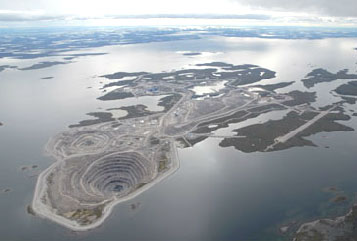
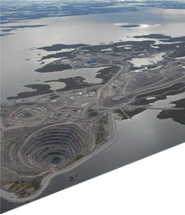
The Diavik Diamond Mine, operated by Diavik Diamond Mines Inc. and owned by Rio Tinto and Harry Winston Diamond Corporation, is located in the Northwest Territories at Lac de Gras. The mine moved from open pit mining methods to underground mining in 2010.
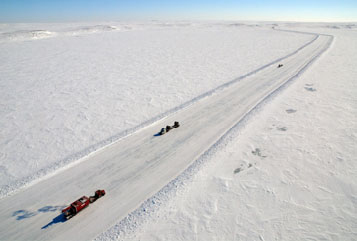
Cementation was selected to carry out underground decline and drift development, as well as extract bulk samples. Construction commenced on site in 2005 with the excavation of two portals and liner installations. Arctic experience and excellent safety performance were key considerations in Cementation being selected to carry out the work.
To carry out the project, Cementation assigned the contract to Kitikmeot Cementation Mining & Development Ltd., a partnership between Kitikmeot Corporation of Nunavut and Cementation. Cementation is the managing partner for the project.
ACHIEVEMENTS:
The development of skills and training opportunities for Aboriginal and Northern people in the areas of underground mining and safety
Burj al Arab
BRIEF FACTS: Client: HH Sheikh Mohammed Bin Rashid Al Maktoum Location: Dubai – United Arab Emirates Partner: Al Habtoor Completion: 1999
OVERVIEW:
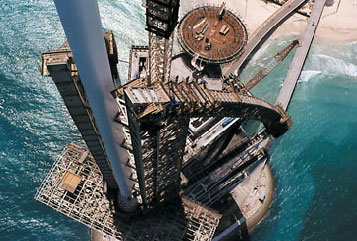
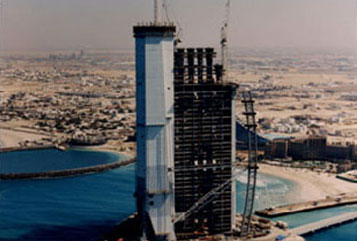
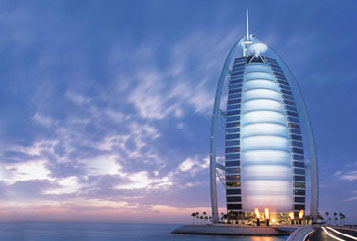
Completed through the partnership of Murray & Roberts and Al Habtoor for the Ruler of Dubai, Sheikh Mohammed Bin Rashid Al Maktoum, Burj al Arab is the world’s tallest structure with a membrane façade. It was designed to resemble a sailing dhow and built on a man-made island in the Arabian Gulf and it is the ultimate expression of luxury and hospitality.
This project presented a range of construction challenges, not least of which was the logistics of erecting a massive, complex steel structure requiring 9 000 tonnes of steel produced in and transported from South Africa and lifted by three massive cranes. The atrium is 180 metres high, one of the tallest in the world. A 24 metre wide helipad projects from the building 210 meters above the ground.
Partnership and teamwork were key elements of the success. The partnership with Al Habtoor was mutually beneficial, enabling Al Habtoor to tackle this major project in its own market and Murray & Roberts to generate new international growth and success.
The Burj al Arab was officially opened in November 1999, one month ahead of schedule and in time for the turn of the millennia. The project today represents a global icon of construction achievement.
ACHIEVEMENTS:
Burj al Arab is the world’s tallest structure with a membrane façade
The atrium is 180 metres high, one of the tallest in the world
Burj Al Arab was at the time of completion the first 7-star hotel in the world